Unlock the power of AI driven
Unlock the power of AI driven
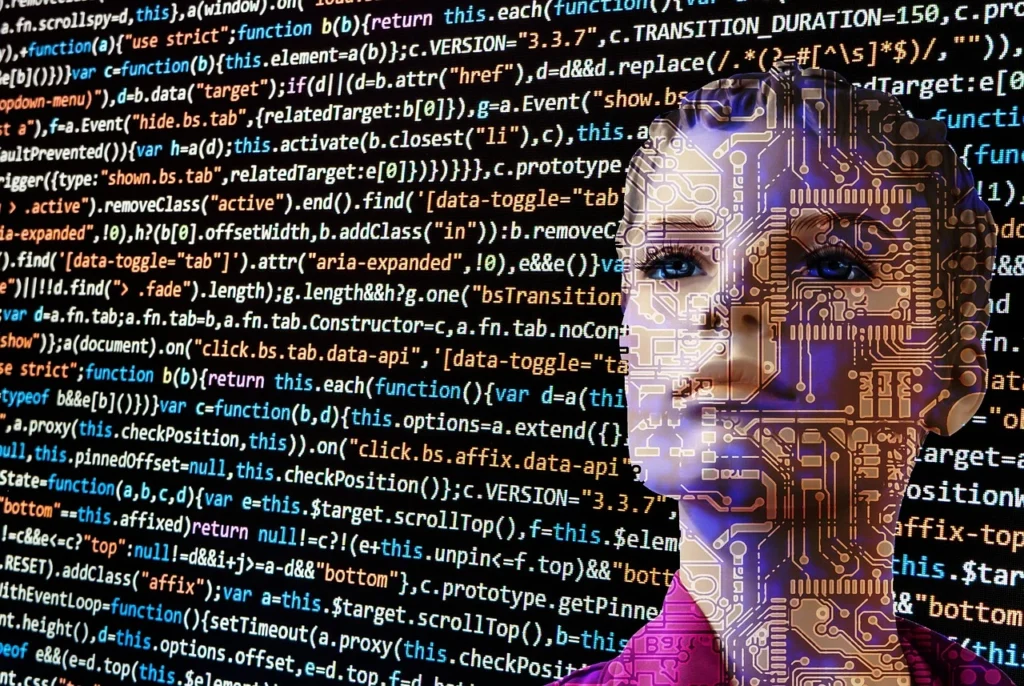
In the fast-paced world of financial markets, where fortunes are made and lost in the blink of an eye, traders are constantly seeking an edge to stay ahead of the game. Over the years, technology has played a pivotal role in reshaping the landscape of trading, and one innovation stands out above the rest: Artificial Intelligence (AI) applied to trading. In this article, we’ll delve into the fascinating realm of AI and explore how it’s revolutionizing the way we trade, making predictions more accurate, and uncovering hidden opportunities that were once beyond human comprehension.
AI, as the name suggests, is the creation of intelligent machines that can mimic human-like reasoning and problem-solving abilities. When applied to the financial markets, AI can analyze vast amounts of data, identify patterns, and make decisions without human intervention. Unlike traditional algorithms that rely on predefined rules, AI utilizes machine learning techniques to continuously improve its performance based on past experiences.
At the core of AI in trading lies the power of machine learning algorithms. These algorithms ingest historical market data and learn from it, enabling them to adapt and evolve their strategies over time. For instance, a popular machine learning approach called “Reinforcement Learning” allows an AI trading model to interact with a simulated market and learn from its successes and failures.
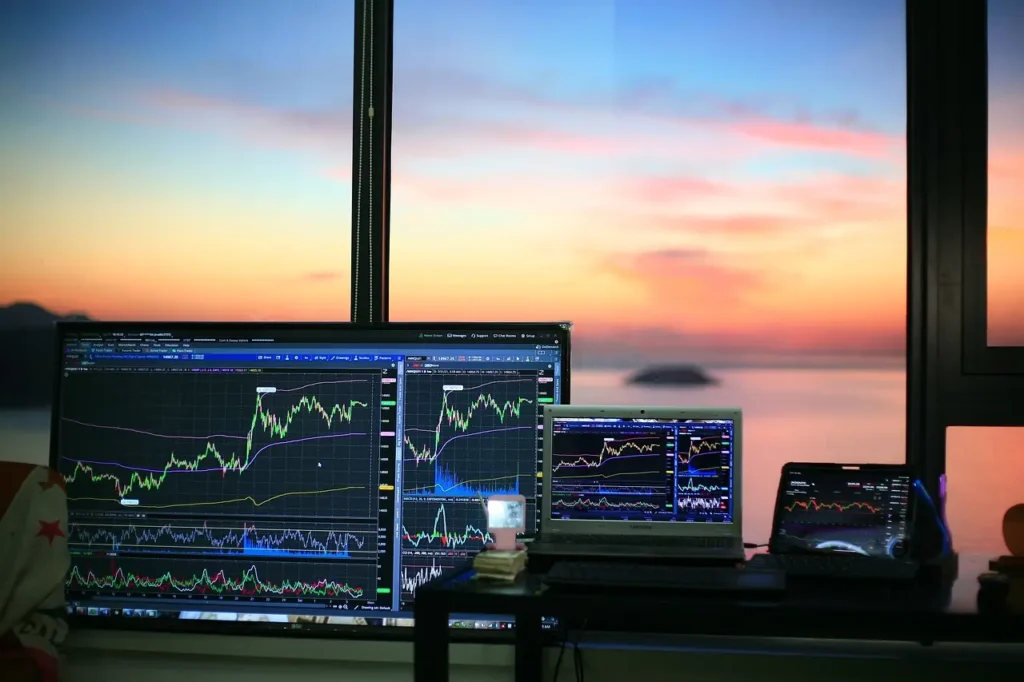
Imagine an AI trader analyzing historical price charts of a particular stock. It identifies recurring patterns that precede significant price movements and learns to execute profitable trades based on these patterns. As more data becomes available, the AI continuously refines its strategies, becoming increasingly adept at navigating the complexities of the financial markets.
Predicting market movements is the holy grail of trading, and AI has proven to be a game-changer in this domain. With its ability to process vast amounts of data and recognize hidden patterns, AI can predict price trends and identify potential turning points with remarkable accuracy.
One famous example is Renaissance Technologies, a hedge fund founded by mathematician James Simons. The fund has been utilizing AI-driven strategies for years and has achieved extraordinary returns, significantly outperforming traditional funds. Their AI models crunch immense datasets, including historical prices, economic indicators, news sentiment, and more, to spot lucrative opportunities that human traders might miss.
Beyond analyzing traditional market data, AI can also gauge market sentiment by combing through news articles, social media posts, and other sources of information. This approach, known as “Sentiment Analysis,” helps AI traders understand how public perception can influence market movements.
For instance, if an AI system detects overwhelmingly positive sentiments surrounding a specific company, it might infer that the stock is likely to experience a surge in value. In contrast, negative sentiment could signal an impending decline. By incorporating sentiment analysis into their trading strategies, AI-powered traders gain a deeper understanding of the market’s emotional undercurrents, enabling them to make more informed decisions.
In the unpredictable world of trading, risk management is paramount. Even the most sophisticated trading algorithms can encounter unexpected market conditions, leading to substantial losses. However, AI excels in this area by applying risk management techniques with speed and precision.
AI traders continuously monitor their positions, adjusting risk exposure and position sizes to minimize potential losses. By identifying adverse market conditions in real-time, AI can swiftly exit a losing position before it spirals into a catastrophe. This agility in risk management gives AI traders a significant advantage over traditional methods, where human emotions and biases may hinder swift decision-making.
While AI has revolutionized trading, it doesn’t render human traders obsolete. Instead, it complements their skills and augments their decision-making process. AI can process vast amounts of data and perform repetitive tasks with incredible efficiency, freeing up human traders to focus on more strategic aspects of their trading strategies.
A successful example of the human-AI synergy is seen in JP Morgan’s COIN (Contract Intelligence) platform. The bank uses AI to review and interpret complex legal documents, a task that would traditionally take hundreds of thousands of hours for human lawyers. This combination of AI’s speed and accuracy with human expertise results in enhanced productivity and reduced risk.
While the benefits of AI in trading are undeniable, it’s essential to address the challenges and ethical considerations that arise with its implementation. One significant concern is the potential for AI-driven trading to exacerbate market volatility and contribute to flash crashes.
In May 2010, the infamous “Flash Crash” led to a rapid and severe market downturn, with the Dow Jones Industrial Average losing nearly 1,000 points in minutes. The incident was partially caused by algorithmic trading gone awry. As AI becomes more prevalent in trading, regulators and market participants must work together to implement safeguards and prevent such occurrences.
As AI continues to advance, it will undoubtedly reshape the landscape of trading in the years to come. With increasing computational power and access to vast troves of data, AI algorithms will become even more sophisticated, yielding better results and uncovering new opportunities. The integration of AI and blockchain technology could also revolutionize trading by increasing transparency and trust in financial markets.
Moreover, as AI becomes more prevalent, we can expect reduced trading costs, improved liquidity, and enhanced market efficiency. This democratization of trading will enable smaller investors to access sophisticated AI-driven strategies that were once only available to large institutions.
In conclusion, AI applied to trading represents a paradigm shift in the financial markets. By leveraging machine learning algorithms and advanced data analytics, AI can predict market movements with uncanny accuracy, adapt to changing conditions, and minimize risks. While ethical considerations and regulatory challenges must be addressed, the benefits of AI in trading are undeniable. As we step into the future, it’s clear that AI will play a pivotal role in shaping the world of finance, unlocking new possibilities and creating a more dynamic and inclusive trading environment for all.
Ce site utilise des cookies pour améliorer votre expérience de navigation. En poursuivant votre navigation, vous acceptez l'utilisation de ces cookies.